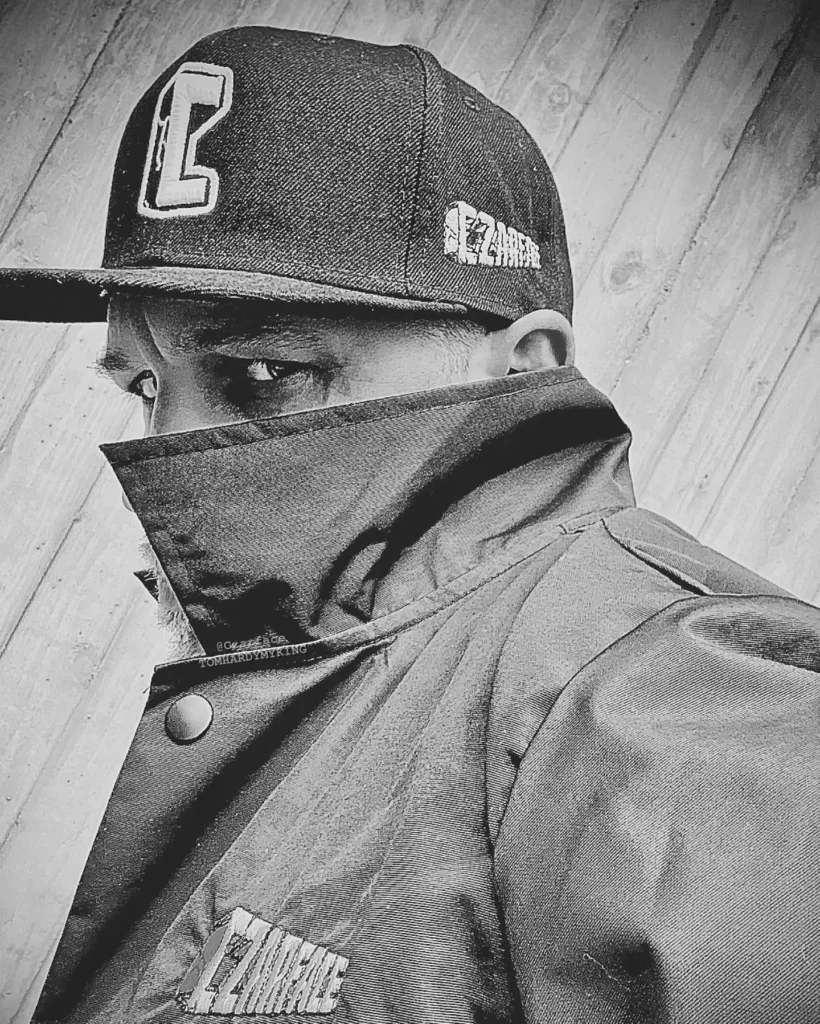
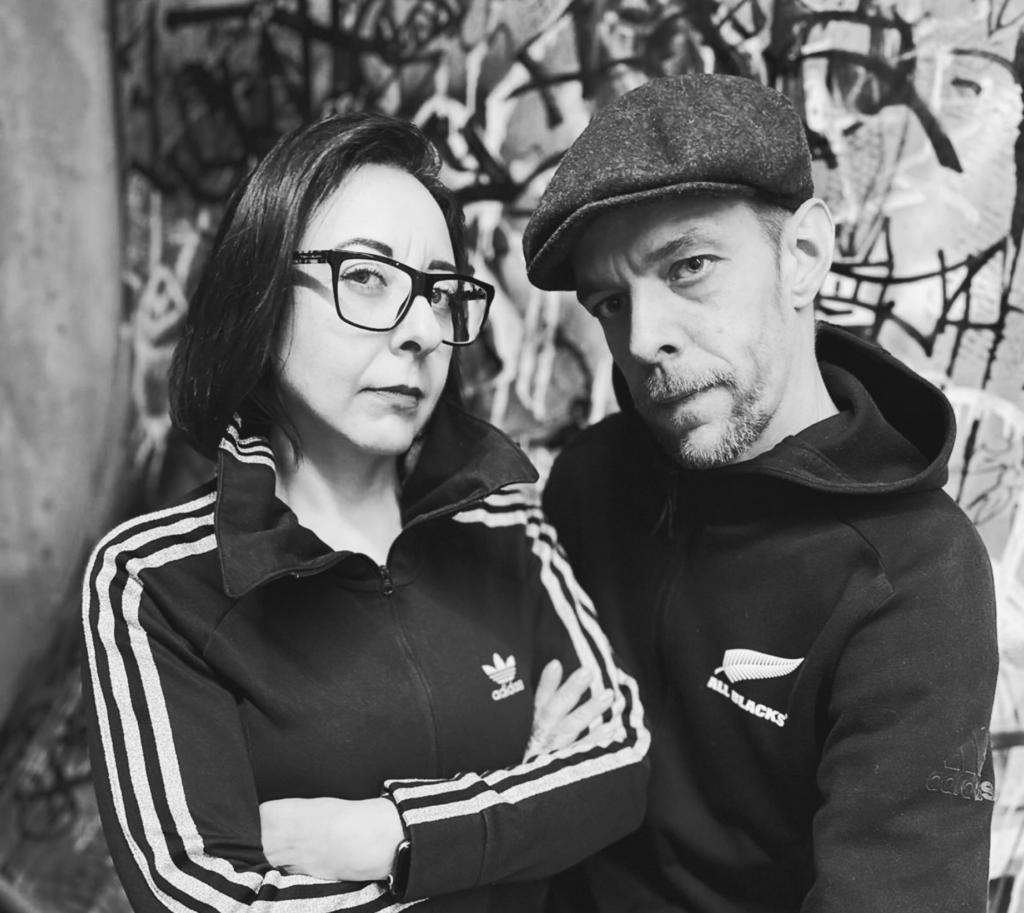
Nato dall’incontro tra Oliver Kucera e Delayed Sentence, BTWN NTWRX trasforma il B2B in un metodo compositivo basato su jam, hardware e improvvisazione. Formatosi nei Paesi Bassi nel 2024 e oggi basato a Roma, il duo lavora sulla costruzione delle tracce in tempo reale, mettendo in relazione DJing e performance live.
Con release su Tar Hallow ed Eclectic Limited e un percorso parallelo come Kucera & Delayed Sentence, arrivato fino a Symbolism di Ben Sims, abbiamo parlato con i due producer di macchine, groove, processi compositivi, influenze fuori dalla techno e delle realtà che continuano a mantenere vivo l’underground.
1. BTWN NTWRX nasce dall’incontro di due percorsi molto diversi e da una serie di sessioni B2B. Quando avete capito che tra voi non funzionava soltanto la selezione, ma stava emergendo un linguaggio comune? E quali incontri, dischi o artisti sono stati realmente determinanti nel definire quella direzione?
È stato il nostro secondo B2B, andato in onda durante il programma radio tenuto da Delayed Sentence, The Garbage Game, su AMW.fm: due ore di scambi continui in un flusso coerente e serrato fino all’ultima traccia. Quando abbiamo finito, eravamo tanto esausti quanto entusiasti perché, palesemente, era appena successo qualcosa di pazzesco: non capita spesso di trovare un tale sincronismo con qualcuno, figuriamoci in modo così naturale.
Quando siamo andati ad ascoltarlo di nuovo, abbiamo scoperto che l’audio non era stato registrato. Eravamo distrutti. C’è una teoria nascosta secondo cui ogni volta che suoniamo insieme cerchiamo di ricreare l’energia di quel set che non potrà mai più essere ascoltato.
Probabilmente è stato il primo STOOR at Paradiso a cui abbiamo assistito insieme, mesi prima, a tracciare silenziosamente la direzione che avremmo preso. Solo che dovevamo ancora scoprirlo.
2. Le vostre produzioni non vengono sempre firmate allo stesso modo: “BRVTL HNST” e “Difference Threshold” sono usciti come BTWN NTWRX, mentre “Independent Variables” su Symbolism è firmato Kucera & Delayed Sentence. Dove passa esattamente il confine tra le due identità? È il modo in cui nasce il materiale a determinarne la firma o cambiano anche scrittura, arrangement e processo produttivo?
Le produzioni dei BTWN NTWRX nascono sempre da jam session: è il nostro modo preferito di comporre, è il momento in cui i nostri singoli input sonori si fondono per costruire una traccia in tempo reale. Non c’è quasi nessuna pianificazione, semplicemente ci lasciamo guidare dal flusso creativo.
I brani firmati individualmente in collaborazione, invece, sono più ponderati, sebbene il processo possa partire da qualsiasi cosa: da una linea di basso che abbiamo sentito, da un discorso in un’altra lingua o anche da registrazioni sul campo.
3. Su “Independent Variables” compare anche un edit di Ben Sims. Come è nato il suo intervento sul vostro materiale? E cosa succede quando un producer con un linguaggio così riconoscibile entra in una vostra produzione: c’è qualcosa nella sua lettura che vi ha fatto riascoltare diversamente il vostro stesso lavoro?
Beh, senza il contributo di Ben, “909 Workout” non esisterebbe. Oliver aveva inviato a Ben Sims, insieme ad altre tracce, un clip lungo meno di due minuti, giusto per chiedergli cosa ne pensasse: la sua risposta è stata proprio il remix che è stato poi pubblicato.
Ecco quindi l’esempio perfetto di una reinterpretazione che non solo ha valorizzato il brano, ma ne ha permesso l’esistenza stessa.
4. Avete definito la vostra postazione un “sound lab”, costruito tra hardware analogico e CDJ. Entriamo nelle macchine: quali strumenti sono realmente centrali oggi nel vostro setup, come vi dividete sequencing, drums, synthesis, processing e selezione, e quale macchina ha inciso maggiormente sul vostro modo di costruire il groove?
La configurazione base è composta da due, idealmente tre, deck, un mixer, meglio se Pioneer, e la Roland TR-8S: è così che abbiamo improvvisato per la prima volta in assoluto, e da quella registrazione è nato il nostro primo EP.
La configurazione cambia spesso per includere nuovi componenti hardware, come AKAI MPC, a volte per necessità, per soddisfare i requisiti di spazio e trasporto. A volte i deck vengono sostituiti dai giradischi, il che apre a nuovi scenari performativi alzando al contempo l’asticella, considerando che non c’è un clock unificato per sincronizzare ciò che facciamo. È una scelta voluta, perché consente un risultato che si vuole organico in ogni momento.
Nessuna apparecchiatura ha più impatto di un’altra sul groove che costruiamo, purché venga mantenuta la versione essenziale della configurazione. Il nostro groove è la combinazione di molti elementi individuali che vanno oltre il macchinario a disposizione.
5. Quando parlate di “building the track in real time”, viene meno l’arrangement tradizionale come struttura prestabilita. Come gestite allora progressione, tensione e transizioni mentre improvvisate? Esistono dinamiche consolidate tra voi oppure sono l’ascolto reciproco e la conoscenza delle macchine a determinare ogni passaggio?
Il background live di Oliver è senza dubbio fondamentale in questo processo. Ma oltre vent’anni di esperienza in consolle a suonare generi diversi ti insegnano molto sulla metrica e sul fraseggio, sull’equalizzazione e sulle transizioni, oltre che a interpretare l’atmosfera della sala ed essere pronto a cambiare direzione al volo.
La nostra dinamica è più naturale che prestabilita e si basa sull’ascolto attento l’uno dell’altro, lavorando con anticipazione per completare la tela sonora con il colore mancante, o con un colore che riteniamo adatto, e costruendo il brano sovrapponendo loop, concedendoci spazio, o dandoci uno spintone, a vicenda.
Suoniamo insieme contemporaneamente per tutta la durata della performance e accogliamo l’imprevisto come un’occasione per spingerci oltre i nostri limiti.
6. Le influenze che finiscono nella vostra musica non sembrano necessariamente fermarsi alla techno. Se doveste ricostruire la genealogia del vostro suono attraverso tre artisti o tre dischi, anche molto distanti dal vostro territorio musicale, quali scegliereste? E cosa è entrato concretamente nel vostro modo di produrre: groove, sound design, approccio alle macchine o attitudine?
Non è una risposta semplice, perché i nostri percorsi musicali erano già piuttosto “maturi” quando ci siamo incontrati. E forse delle risposte individuali si adattano meglio alla domanda.
Per Oliver si tratta di parti ed elementi di un elenco di artisti che non può essere racchiuso in sole tre voci. Dal punto di vista dei generi, nel suo percorso ci sono stati l’hip hop o persino l’hardcore, con l’electro che continua a svolgere un ruolo importante in ciò che fa.
Per Roberta, crescere all’interno della scena punk-cybergoth a Roma ha rappresentato un primo contatto con l’elettronica: industrial ed EBM erano l’unica alternativa accettabile ai generi imperanti dell’epoca, DnB, free tekno e commerciale.
Avendo entrambi spaziato un po’ ovunque, le influenze che ognuno di noi porta sono variegate e al contempo percepibili da un ascoltatore attento. Abbiamo sicuramente etichette e artisti in comune, che entrambi amiamo e che hanno contribuito a plasmare il nostro sound individuale prima che potesse nascerne uno comune: per citarne alcuni, Speedy J, Dave Clarke e Ben Sims. Ma anche le sonorità di PoleGroup e della scuola napoletana hanno lasciato la loro impronta nei nostri gusti e nella nostra visione comune.
7. Il vostro background sembra andare molto oltre i riferimenti più immediati della techno. Scavando più a fondo: quali sono gli artisti meno celebrati o rimasti fuori dal racconto mainstream che hanno influenzato davvero il vostro modo di ascoltare, selezionare o produrre musica?
Proveniamo da due Paesi diversi che hanno contribuito alla musica dance elettronica in periodi e modi diversi. Inoltre, entrambi abbiamo trascorso molto tempo lontani dalla nostra patria, il che ha contribuito ad arricchire il nostro percorso individuale.
La musica britannica in generale rappresenta un’influenza comune per entrambi, anche se legata a generi diversi. Lo stesso vale per l’electro, grazie alle sue numerose sfaccettature, rappresentate sia da band che da produttori.
Proprio a questo proposito, va fatta una menzione speciale a Melatron, un artista meno celebrato ma dal grande talento che ha anche il merito di aver introdotto Oliver alla scena musicale underground inglese. Da allora i due, insieme ad Ara_U, hanno formato i Return of the Luddites, consolidando la formazione di un nuovo genere: l’ElectroPunk.
Infine, l’influenza reciproca che esercitiamo l’uno sull’altro si è probabilmente rivelata la più fondamentale. Roberta ha introdotto nuovi generi, dalla samba alla synthwave, passando per psytrance o dek bass, aprendo le porte a ulteriori ricerche sonore, nelle quali il contributo di Oliver è stato massiccio. Ciò ha ovviamente arricchito le produzioni, ampliandone i paesaggi sonori.
8. Avete già incrociato realtà differenti come Tar Hallow, Eclectic Ltd. e Symbolism. Guardando oggi oltre una singola scena o geografia, quali label, producer o collettivi dell’underground internazionale vi sembrano realmente interessanti? E con chi avrebbe senso condividere uno studio, non per una collaborazione di nome, ma perché potrebbe portarvi verso un territorio che ancora non avete esplorato?
Venendo da Amsterdam, una città che pullula di musica elettronica, siamo abituati a vedere emergere collettivi di ogni tipo che poi o crescono o scompaiono. Tuttavia, la crescita comporta sempre una perdita di autenticità e identità: lo vediamo oggi in tutti i grandi festival.
Con la gentrificazione della scena underground a cui stiamo assistendo, è importante supportare quelle realtà che “lo fanno per amore della musica”, non per la popolarità o gli interessi economici. Tra queste meritano menzione i collettivi che hanno accompagnato e favorito la nascita di BTWN NTWRX, come 8sixA e Amsterdam Most Wanted, entrambi situati nell’area creativa della città, NDSM.
Realtà come queste sono preziose perché mantengono viva la scena fornendo spazi – uno studio di masterizzazione, cabine di prova con tanto di pista da ballo, una radio in streaming, ma anche eventi open decks, workshop e mostre – che diventano un cantiere artistico accessibile per progetti di ogni tipo, dove la musica elettronica la fa sempre da padrona.
Gli eventi Neue Elektro Welle, tenuti da Professor Dictabeat a Berlino, sono una realtà giovane che vale davvero la pena conoscere perché promuovono electro realizzata principalmente con hardware: ideale per un break dal monopolio della techno.
E con chi avrebbe senso condividere uno studio? Per Oliver, con nessuno. Uno studio è uno spazio sacro dove accadono cose magiche. L’esperienza passata di condivisione di uno studio a tempo pieno ha dimostrato che, a confronto, i vantaggi sono di gran lunga inferiori alle perdite, tra attrezzatura, tempo e altro.
Tutto il contrario vale per gli impegni a breve termine: collaboriamo già con una grande varietà di artisti, proprio per il valore aggiunto della diversità.
ENGLISH VERSION
BTWN NTWRX: from the booth to real-time composition
Born from the meeting of Oliver Kucera and Delayed Sentence, BTWN NTWRX turns the B2B format into a compositional method built around jamming, hardware and improvisation. Formed in the Netherlands in 2024 and now based in Rome, the duo works by constructing tracks in real time, bringing DJing and live performance into the same process.
With releases on Tar Hallow and Eclectic Limited, alongside a parallel output as Kucera & Delayed Sentence that has taken them to Ben Sims’ Symbolism, we spoke to the two producers about machines, groove, compositional processes, influences beyond techno and the spaces and communities still keeping the underground alive.
1. BTWN NTWRX emerged from two very different musical paths and a series of B2B sessions. When did you realise that what was happening between you went beyond track selection and that a shared language was beginning to emerge? And which encounters, records or artists genuinely helped define that direction?
It was our second B2B, broadcast during Delayed Sentence’s radio show, The Garbage Game, on AMW.fm: two hours of constant exchanges, maintaining a coherent, tight flow right up to the final track. By the time we finished, we were as exhausted as we were excited because something pretty crazy had clearly just happened. It’s not often that you find that level of synchronicity with someone, let alone so naturally.
When we went back to listen to it, we discovered that the audio hadn’t been recorded. We were devastated. There’s a hidden theory that every time we play together, we’re trying to recreate the energy of that set that can never be heard again.
It was probably the first STOOR at Paradiso we attended together a few months earlier that quietly pointed us towards the direction we would eventually take. We just didn’t know it yet.
2. Your productions aren’t always released under the same name: “BRVTL HNST” and “Difference Threshold” came out as BTWN NTWRX, while “Independent Variables” on Symbolism is credited to Kucera & Delayed Sentence. Where exactly is the line between those two identities? Is it the way the material originates that determines the name, or do the writing, arrangement and production processes change as well?
BTWN NTWRX productions always originate from jam sessions. It’s our preferred way of composing: the moment when our individual sonic inputs merge and we build a track in real time. There’s almost no planning involved; we simply allow ourselves to be guided by the creative flow.
Tracks released under our individual names as collaborations are more considered. The process, however, can begin with almost anything: a bassline we’ve heard, a speech in another language or even field recordings.
3. “Independent Variables” also features an edit by Ben Sims. How did his involvement with your material come about? And what happens when a producer with such a recognisable language enters one of your productions? Was there anything in his interpretation that made you hear your own work differently?
Well, without Ben’s contribution, “909 Workout” wouldn’t exist. Oliver had sent Ben Sims a clip of less than two minutes, along with some other tracks, simply to ask what he thought of it. His response was the remix that was eventually released.
So it’s the perfect example of a reinterpretation that didn’t just enhance the track, but actually enabled the track itself to exist.
4. You’ve described your setup as a “sound lab”, built around analogue hardware and CDJs. Let’s get into the machines: which instruments are genuinely central to your setup today, how do you divide sequencing, drums, synthesis, processing and selection between you, and which machine has had the greatest impact on the way you construct a groove?
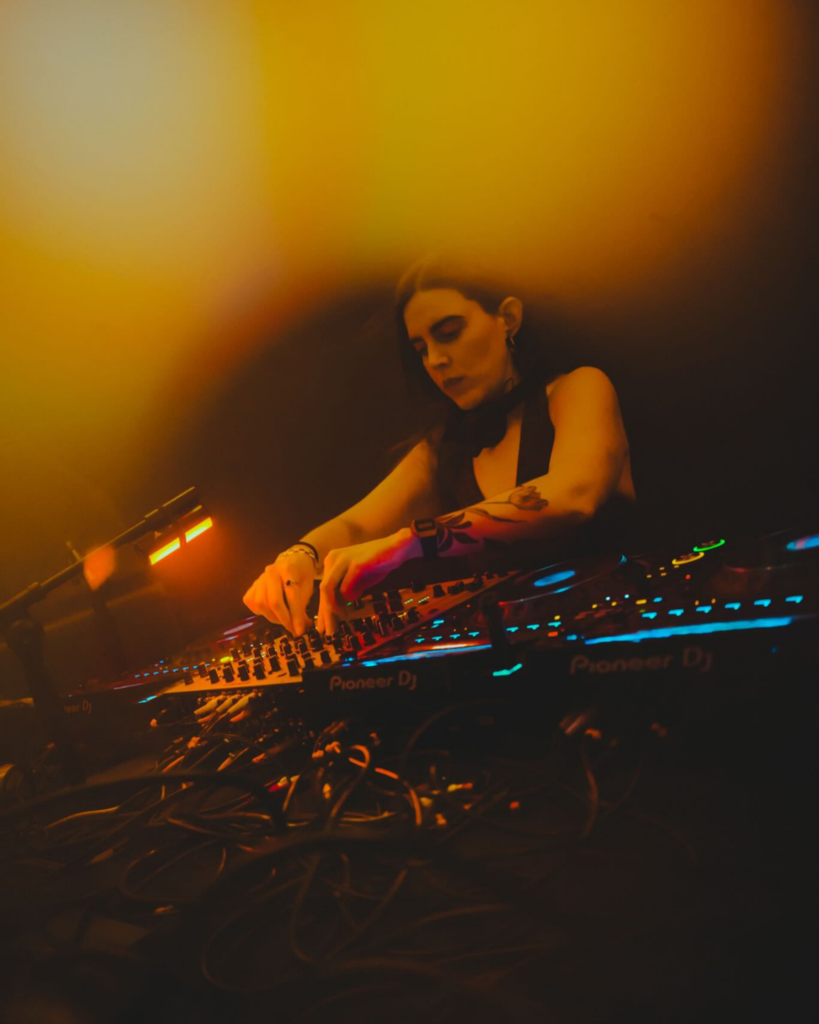
The basic setup consists of two, ideally three, decks, a mixer – preferably Pioneer – and the Roland TR-8S. That’s how we improvised together for the very first time, and the recording of that session became our first EP.
The setup changes frequently to incorporate new pieces of hardware, such as an AKAI MPC, sometimes simply out of necessity to meet space and transport requirements. At times, the decks are replaced by turntables, opening up new performance possibilities while simultaneously raising the level of difficulty, since there is no unified clock synchronising what we do. That’s a deliberate choice because it allows the result to remain organic at all times.
No single piece of equipment has a greater impact than another on the groove we build, as long as the essential version of the setup remains intact. Our groove is the combination of many individual elements that go beyond the machinery available to us.
5. When you talk about “building the track in real time”, the traditional idea of arrangement as a predetermined structure largely disappears. How do you manage progression, tension and transitions while improvising? Are there established dynamics between you, or is every move determined by listening to each other and knowing the machines?
Oliver’s live background is undoubtedly fundamental to this process. But more than twenty years behind the decks, playing different genres, teaches you a great deal about metre and phrasing, EQ and transitions, as well as how to read the atmosphere in the room and be ready to change direction on the fly.
Our dynamic is more natural than predetermined. It’s based on listening closely to each other and anticipating what comes next, completing the sonic canvas with whatever colour is missing – or whatever colour we feel belongs there – and building the track by layering loops, giving each other space or, occasionally, giving each other a push.
We both play simultaneously throughout the entire performance, and we welcome the unexpected as an opportunity to push ourselves beyond our limits.
6. The influences that find their way into your music don’t necessarily stop at techno. If you had to trace the genealogy of your sound through three artists or three records, even ones far removed from your own musical territory, what would you choose? And what specifically entered your production language from them: groove, sound design, the approach to machines or simply attitude?
It’s not an easy question to answer because our musical paths were already fairly “mature” by the time we met. Individual answers might actually make more sense here.
For Oliver, it’s about different parts and elements of a list of artists that simply can’t be reduced to three names. In terms of genres, his journey has included hip hop and even hardcore, while electro continues to play an important role in what he does.
For Roberta, growing up within Rome’s punk-cybergoth scene provided an early point of contact with electronic music: industrial and EBM were the only acceptable alternatives to the genres dominating at the time – DnB, free tekno and commercial music.
Since we’ve both moved across a wide range of musical territories, the influences each of us brings are varied but still perceptible to an attentive listener. There are certainly labels and artists we share a love for, which helped shape our individual sounds before a common one could emerge: Speedy J, Dave Clarke and Ben Sims, to name a few. The sounds of PoleGroup and the Neapolitan school have also left their mark on both our tastes and our shared vision.
7. Your backgrounds seem to extend well beyond techno’s most immediate reference points. Digging deeper, which less celebrated artists – or figures who have largely remained outside the mainstream narrative – have genuinely influenced the way you listen to, select or produce music?
We come from two different countries that have contributed to electronic dance music at different times and in different ways. We’ve also both spent a considerable amount of time away from our home countries, which has further enriched our individual paths.
British music in general is a shared influence for both of us, although through different genres. The same is true of electro, given its many different facets across both bands and producers.
In that respect, Melatron deserves a special mention: a less celebrated but hugely talented artist who also introduced Oliver to the English underground music scene. The two later joined forces with Ara_U to form Return of the Luddites, consolidating the development of a new genre: ElectroPunk.
Ultimately, however, the influence we have on each other has probably proved to be the most fundamental. Roberta introduced new genres – from samba and synthwave to psytrance and dek bass – opening the door to further sonic exploration, to which Oliver has contributed extensively. That has inevitably enriched our productions and expanded their sonic landscapes.
8. You’ve already crossed paths with different entities such as Tar Hallow, Eclectic Ltd. and Symbolism. Looking beyond any single scene or geographical area today, which labels, producers or collectives on the international underground scene do you find genuinely interesting?
Coming from Amsterdam, a city buzzing with everything electronic music, we are used to seeing all sorts of collectives pop up and either scale up or disappear. However, scaling up always generates a loss of authenticity and identity: we see this with all the major festivals nowadays.
With the gentrification of the underground that we are seeing, it is important to give space and attention to those realities that “do it for the sake of the music”, not for popularity, money or stardom.
Among them, worth mentioning are the collectives that have witnessed and fostered the birth of BTWN NTWRX, like 8sixA and Amsterdam Most Wanted, both located in the creative area of the city, NDSM. Realities like these keep the scene alive by providing spaces (a mastering studio, practice booths with a dancefloor, a streaming radio; and courses, workshops, exhibitions) that become an accessible workbench for projects of all kind, where electronic music always dominates.
The Neue Elektro Welle events hosted by Professor Dictabeat in Berlin are a young reality, though very worth mentioning for promoting (mostly) hardware-made Electro – if you want to take a break from the monopoly of Techno. And with whom would it make sense to share a studio…
For Oliver, no one! A studio is a sacred space where magical things happen. Previous experience with sharing a studio full time has proven gains to be much smaller than the losses (gear, time, etc) if compared.
However, for short term commitments, we already mingle with quite the variety of artists, exactly for its enriching value.